































Delamar Dry Lake Land Strip, Nevada

NVAHOF VIRTUAL MUSEUM

Delamar Dry Lake Landing
Strip

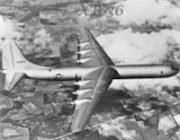
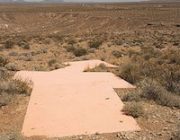
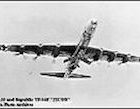
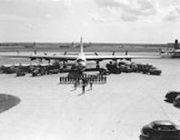
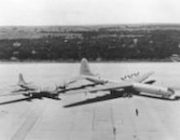
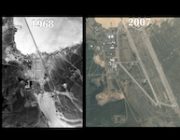
The Delamar dry lake landing field was established in 1943 and became one of the designated emergency landing sites for the X-15 because it was underneath the Delamar Dry Lake Drop Zone where the X-15s were drop-launched from the B-52 for high altitude and space flights. DelamarThe Delamar Dry Lake was one of six ancient lakes located in Nevada along the 500 mile flight path extending from Delamar Dry Lake Utah to Edwards AFB, California for flights of  extending 2.9 miles, Runway Altitude- 4,000 ft, Photo Altitude- 24,000 ft.

Delamar Lake Landing Strip was designated as an emergency landing site for the X-15. The airfield was also known as Delamar Landing Field. No structures were built there. The lake bed remains but is not officially considered an airport.

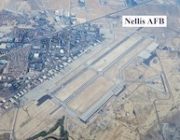
On May 21, 1962, X-15 pilot Neil Armstrong (later a Gemini and Apollo astronaut) flew an F-104 to Delamar Dry Lake in case it would be needed for an upcoming X-15 flight. The F-104 was damaged in the landing attempt at Delamar when the landing gear began to retract. Armstrong got the plane back in the air and diverted to Nellis AFB in Las Vegas.


During Flight 1-63-104 on May 6, 1966, an X-15 experienced an engine failure and landed at Delamar Dry Lake. In 1968 Mike In flight Adams launched his X-15 at Delamar Lake on an ill-fated mission where he earned his astronaut wings, but lost his life when he reentered the Earth’s atmosphere in a Mach 5 spin. The X-15 crashed near Cuddleback Lake in California. The

LaunchAn eyewitness report regarding the Space Shuttle Columbia disaster came from a camper who was at Delamar Dry Lake on the morning of Feb 1, 2003. The eyewitness saw the space shuttle cross the pre-dawn sky, as well as a bright flash in the contrail. Minutes later, the camper saw two twinkles” descend into mountains perceived to be nearby. NASA considered this report credible enough to analyze radar data and send a ground search crew to the area to look for debris. None was found.

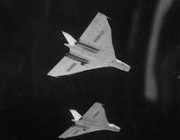
The first flight of the X-15 was on June 8, 1959 and the last flight was launched in Nevada in 1968. The X-15 obtained a max speed of Mach 6.6 and altitude of 334,000 feet. Eight of the X-15 test pilots exceeded the altitude of 50 miles which made them astronauts during these flights launched and flown in Nevada.

X-15 flight paths graph showing lake locations

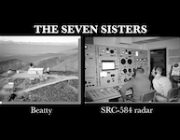
Beatty, Nevada NASA High Range Tracking Station Ely NASA High Range tracking station
Beatty NASA High Range Tracking Station (Located 18 miles North of Beatty, Nevada) Ely NASA High Range Tracking Station

NASA High Range Tracking Stations _ Nevada

Beatty Tracking Station

Ely Tracking Station

Crashes

Emergency Landing Airstrips:

Delamar Lake

Grapevine Lake

Groom Lake

Mud Lake

Railroad Valley

Smith Ranch

Sources

Photo credits: NASA

Reference URL: X-15

Reference
URL:

  • Dennis R. Jenkins, X-15, Extending the Frontiers of Flight (Library of Congress ISBN 978-0-16-079285-4, 2007)
  • Milton O. Thompson, At the Edge of Space: The X-15 Flight Program (Washington, DC, and London: Smithsonian Institution Press, 1992).
  • Richard P. Hallion, On the Frontier: Flight Research at Dryden, 1946-1981 (Washington, DC: NASA SP-4303, 1984).
  • Wendell H. Stillwell, X-15 Research Results (Washington, DC: NASA SP-60, 1965).
  • John V. Becker, “The X-15 Program in Retrospect,” 3rd Eugen Sänger Memorial Lecture, Bonn, Germany, Dec. 4-5, 1968, copy in the NASA Dryden Historical Reference Collection.
  • Kenneth W. Iliff and Mary F. Shafer, Space Shuttle Hypersonic Aerodynamic and Aerothermodynamic Flight Research and the Comparison to Ground Test Results (Washington, DC: NASA Technical Memorandum 4499, 1993), p. 2 for quotation Results,” AIAA-93-0311, paper delivered at the 31st Aerospace Sciences Meeting & Exhibit, Jan. 11-14, 1993, in Reno, NV.
  • R. L. Schleicher, “Structural Design of the X-15,” Journal of the Royal Aeronautical Society (Oct. 1963): 618-636.